Search This Blog

Wednesday, April 17, 2013

A Brief Story of Ellen

822 Federal Street, Lynchburg, Virginia. About 1880

     In the course of combing through my family's papers over the years, I have learned a great deal about them. A much harder task has been to uncover what happened to the slaves once they left my ancestors' households in Orange and Spotsylvania Counties. Some of these people were sold, some were given away as presents and a good many escaped to freedom in the summer of 1862. Today I can say that I have successfully discovered the fate of one of these persons, Ellen Upshur.


  Ellen, John and Patsy, 1857

     In 1857 my great great grandmother, Nancy Estes Row, gave three enslaved children--John, Ellen and Patsy--to her daughter and son in law, Martha Jane Williams and James Tompkins Williams. At that time James and Martha were living in Richmond, where James was a successful partner in the merchandising firm of Tardy & Williams. It is impossible to say whether John and Patsy were also of the Upshur family. The fact that John was given with Ellen leads me to believe that he could well have been her brother.

List of runaway slaves, Greenfield plantation, 1862

     Five years after Ellen went to live with the Williamses in Richmond, most of the remaining slaves of Greenfield, my family's ancestral farm in Spotsylvania, escaped to freedom. Nancy Estes Row listed them on this sheet of blue paper and helpfully included their last names and ages. The Upshurs listed here are William, Agnace, Betsy, Robert, Matilda, Peter and Silas Right. Ellen was most likely the daughter of either Agnace or Matilda.
     After the Civil War, the Williamses left Richmond and moved to Lynchburg, which had been the home of James's family since 1814. Martha and James settled at 822 Federal Street, a splendid property that occupies an entire city block. In the photo shown at the beginning of today's post, the building adjacent to the main house was the servants' quarters and kitchen. This became the home of Ellen Upshur. In the photograph, Ellen is one of the servants standing on the side porch of the servants' quarters.

Kitchen in the servants' house, 822 Federal Street

     Ellen had learned to cook at Greenfield, where meals were prepared in an open fireplace in the kitchen house. For many years Ellen cooked for the Williams family, in both Richmond and Lynchburg, using that time honored technique. While living at 822 Federal Street, James T. Williams ordered a modern cook stove for $14 and had it shipped by rail to Lynchburg. He thought Ellen would be delighted by the arrival of this bit of technology, but the opposite proved to be true. She continued to cook in the fireplace and only after some time could she be induced to use the new stove.
     The 1870 census shows Ellen Upshur, the family cook, living in the household of James and Martha Williams. Ellen Maria Upshur and Edward Garland were married in Lynchburg on 28 Janurary 1875. In 1880 the census shows that forty year old Ellen U. Garland, the family cook, is living in the servants' house with her fifty six year old husband, Edward Garland, whose occupation is listed as tobacco factory hand. I last find Edward Garland in the public record working as a waiter at Randolph- Macon Women's College in 1897.
     Ellen is mentioned in a letter written by Martha Row Williams in August 1883. Martha had traveled to Spotsylvania to transact business with her sister in law, Lizzie Houston Row, who lived on land that once was part of Greenfield, where Martha had been born. Ellen accompanied Martha to the old plantation where she had also been born. Martha wrote: "Ellen enjoyed her visit very much."
     Born into slavery, separated from her family as a young girl and enslaved until 1865, Ellen Upshur chose to remain for many years as a free person with the family whom she had served since childhood. 

Wednesday, April 3, 2013

Dr. Row in the Limelight

Dr. Elhanon Winchester Row

     Today I write my eighty-eighth post, which if nothing else proves that anyone with an internet connection and access to a trunk full of old papers can become a history blogger.
     A couple of years ago I wrote a piece about Elhanon Row, who has always been a favorite ancestor of mine: he was the first of my people to graduate from college, the first to graduate from medical school, the first to be elected to state office and the first to be president of the Medical Society of Virginia.
     So when the Orange County Historical Society approached me late last year to write something for their venerable newsletter, the Record, Dr. Row was a logical choice for subject matter. The Record enjoys a well deserved reputation for featuring high quality historical writing by gifted people. While I had every confidence that Elhanon deserved to be read by the Society's membership, I was also honest enough to know that my writing ability was not in the same league with their regular contributors. Orange County author and historian Frank Walker volunteered to spot weld some of the weaker portions of my narrative, and I am proud to say that this effort appears in the current number (Vol. 44, No. 1) of the Record, shown below. For those of you who read this to the end, the date that Dr. Row departed this life should read 23 May 1900. (Images can be clicked on for larger viewing.)
     To my readers who have a strong interest in local history in general and Orange County history in particular, I highly recommend the back issues of the Record, available on the website of the Orange County Historical Society.

Orange County Historical Society Record

Friday, March 29, 2013

"A Splendid Woman"

Estelle Rawlings Tribble

     Estelle Carlton Rawlings was born in Spotsylvania on October 16, 1862 to Zachary Herndon Rawlings and Bettie Row Rawlings. Her father had been wounded at Antietam and was still recuperating when his oldest daughter arrived. The first three years of Estelle's life were caught up in the chaos and tumult of the Civil War. Battles were being fought within hearing distance, slaves were escaping to freedom and the ways of the old South were disappearing before people's very eyes. [Here I wish to express my appreciation to Byrd Tribble, who kindly shared with me many of the images in today's post. Please note that each image can be clicked on for larger viewing.]
     In the spring of 1864, together with Zachary's parents and Bettie's mother and sister, Estelle's parents decided to escape from Spotsylvania for the relative safety of Goochland County before the Union army's expected advance across the Rapidan. This extended family and a small retinue of still loyal slaves loaded wagons with what belongings they could take and trundled to the little crossroads village of Hadensville on the Three Chopt Road. Here they would live as refugees for much of the remainder of the war.
     The Rawlings family returned to Spotsylvania by mid-1865 and began life anew. Estelle's sister Annie Belle was born in 1865, her brother Charles in 1867 (he died just two years later) and her younger sister Mattie arrived in 1869. Zachary bought a farm off Gordon Road near the county poor house, but his abilities and ambitions soon outgrew the life of a farmer. By 1871 Zachary had signed on as a contractor on the Norfolk & Western Railroad. For the next few years the Rawlings' family life was particularly unsettled as they followed the progress of the rail line.

The Rawlings house in Rockbridge

     In the early 1870s Zachary Rawlings bought a grist mill and nineteen acres in Vesuvius in northern Rockbridge County. He built a small store next to the mill and a fine house across the road. Here Estelle and her sisters would grow up and be married. Not long after the Rawlings settled in they received frequent visits from Estelle's uncle George Washington Estes Row (my great grandfather), who had recently lost most of his family due to illness. While living in this house Uncle George worked out a design for an improved railroad car coupling, for which he received a U.S. patent in 1874. The following year thirteen year old Estelle and her family attended his wedding at New Providence Presbyterian Church when he united with Lizzie Houston.
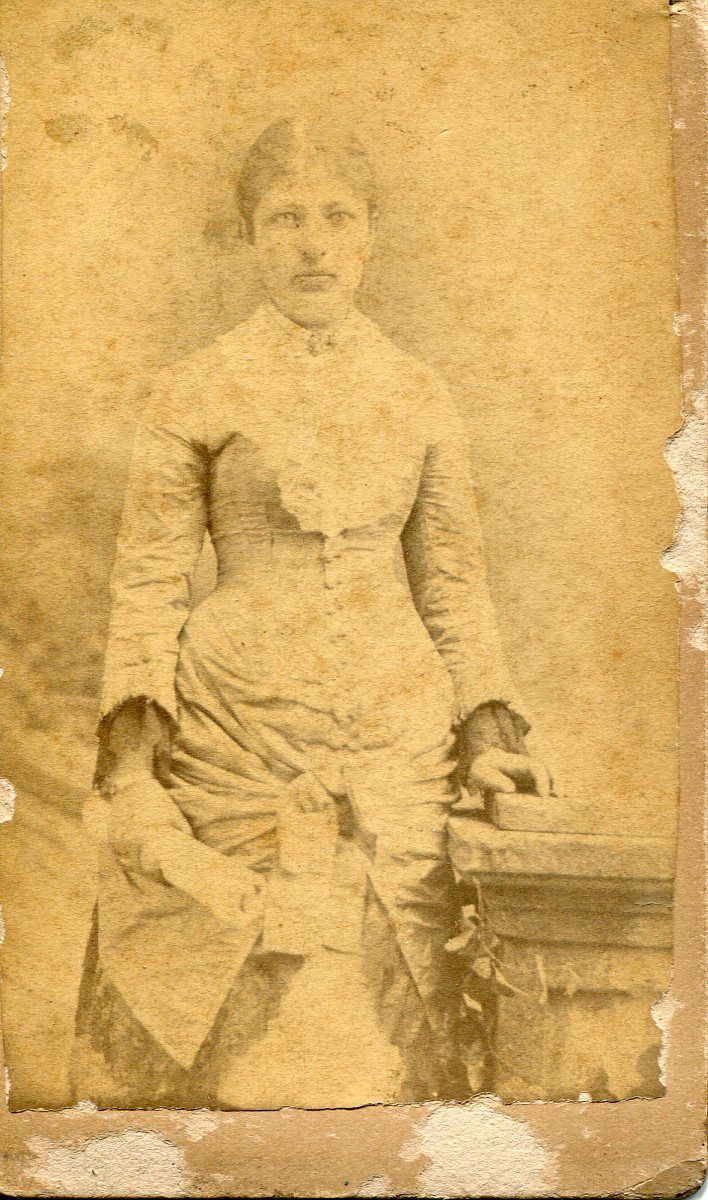
     The Rawlings themselves remained devoted Baptists and would become members of Greenville Baptist Church in Augusta County. When the time came for Estelle to continue her education, the decision was made to send her to the Albemarle Female Institute in Charlottesville, a Baptist affiliated school for girls where her great uncle Richard Herndon Rawlings served for many years as teacher and president. (The photo below shows a young Estelle holding what appears to be her diploma.)

Estelle Rawlings as a student
     Richard Herndon Rawlings (1829-1905) was a younger brother of Zachary's father, James Boswell Rawlings. He was born in Orange County and was a son of Richard Rawlings, a wealthy farmer who before the Civil War the owner of several valuable properties in Orange, including the town's hotel. As early as 1850 R.H. Rawlings had taken his first step in a life long commitment to education; that year's census shows him employed as a teacher in Orange. But there was much more to Rawlings' story than just teaching.
     Rawlings graduated with a law degree from Columbian College in Washington, D.C. in 1854 and soon thereafter migrated to Texas, where he published the Texas Sun 1855-1856 and also practiced law. He then returned to Virginia and in 1857 married Sallie Dickinson of Louisa County. By 1860 he and Sallie were living in Grove Hill, Alabama, where he had a law practice with Sallie's brother, William Powell Dickinson.
     After the outbreak of the Civil War, Rawlings again returned to Virginia and in 1863 enlisted in Company I of the Sixth Virginia Cavalry (the same regiment in which also served George W.E. Row). On May 31, 1864 his horse was shot from under him at Cold Harbor. Rawlings injured his back in the fall and was admitted to Chimborazo Hospital the following day. After recovering he rejoined his regiment only to have a second horse killed in action on September 7 at Opequon Creek. In April 1865 R.H. Rawlings, together with his nephew Ben Rawlings and George W.E. Row, escaped the encirclement at Appomattox. These three, with Estelle's father Zachary, surrendered to the provost marshal in Richmond on May 2, 1865.
 
Revolver and holster of Private R.H. Rawlings

     After the war Rawlings returned to his previous avocation as educator, serving for three years as the president of the Judson Female Institute in Marion, Alabama, where his brother in law W.P. Dickinson served on the board of trustees. Richard and Sallie Rawlings and her brother continued to share a household when they settled in Charlottesville in the 1870s. For the next twenty years Rawlings and Dickinson would teach at the Albemarle Female Institute, each also taking a turn as president of the school.
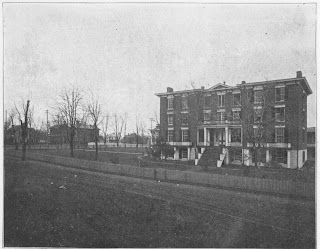
 
The Rawlings Institute (Albemarle Charlottesville Historical Society)

     In 1889 Rawlings bought "Carlton," the sprawling estate adjacent to Monticello that was once the home of District Judge Alexander Rives. The grand old house burned in 1897, the same year that Rawlings bought a controlling interest in the Albemarle Female Institute for $22,000 and then donated the school to the Baptist General Association of Virginia. For this generous act the school was renamed the Rawlings Institute in his honor.

Henry Wise Tribble, 1880s

Wedding announcement of Estelle and Henry

Newspaper notice of Rawlings-Tribble wedding

     The year 1888 would prove to be of lasting significance for Estelle and her family. Estelle's mother died in March and was buried at Greenville Baptist Church. On December 12 Estelle married Baptist minister Henry Wise Tribble in a ceremony at her family's home in Rockbridge.
     Henry Tribble was born in Caroline County on February 8, 1860. He graduated from Richmond College (now the University of Richmond) in 1884 and in 1888 received his Doctor of Divinity degree from the Southern Baptist Seminary in Louisville, Kentucky. Soon after their wedding Estelle and Henry left for Jackson, Tennessee where Henry served as a minister until 1895. The first three of their nine children--Stella, Lewis and Bess--were born in Tennessee.

The Tribble family in Jackson, Tennessee

     In 1895 the growing Tribble family came to Charlottesville, where Henry became pastor of the Charlottesville Baptist Church. Reverend Tribble was active in the civic life of the city (he served on the town council) and became well known throughout the state for his excellent sermons. He often conducted services at the chapel at the University of Virginia. Henry led the organization of High Street Baptist Church and served as its minister 1901-1909.

The Tribbles and Mattie Rawlings Rucker in Charlottesville

     In addition to all of this activity--not to mention heading a household that would include five daughters and four sons--Dr. Henry Wise Tribble assumed yet another role in 1898. That year he was persuaded by the Baptist Association to assume the presidency of the Rawlings Institute. It was a position he was to hold for the next eleven years. Estelle was principal of the "Home Department," which appeared to consist of administering some of the front office duties.
     The Rawlings Institute (as did the Albemarle Female Institute) advertised heavily in a number of Virginia newspapers over the years. The most informative of these appeared as part of a supplement to the July 13, 1906 edition of the Richmond Times Dispatch:

Richmond Times Dispatch 13 July 1906

     Despite her manifold duties as mother and school administrator, Estelle never failed to extend kindness to those in need, including my great grandmother in June 1899. On the stationery of the Rawlings Institute Estelle wrote a heartfelt letter of condolence to Lizzie Houston Row (the envelope and first page of the letter are shown below): My heart goes out to you in this great affliction. The Lord knows what is for our good but we can't see it now...I have thought of you today so often and wished I could be with you. If I can be of service please call on me for I'll take it as a great pleasure to do anything for you.

Estelle's letter to Lizzie Row

Page from Estelle's letter to Lizzie Row

     The success Henry and Estelle achieved at the Rawlings Institute attracted the attention of the Baptist Association in Florida, which in 1909 asked Henry to become president of Columbia College in Lake City. Henry resigned from his positions in Charlottesville in early 1909 and traveled to Florida to begin his new duties and make arrangements for his large family, which now numbered only eight children, as Gladys had died of scarlet fever in 1904. The year after the Tribbles departed for Florida the Virginia Baptist Association sold the Rawlings Institute to the Episcopal diocese, which renamed the school St. Anne's. This venerable institution survives today as St. Anne's Belfield.

The Fredericksburg Free Lance 9 January 1909
     The Tribble family and three servants traveled to Lake City, Florida by train in July 1909 (the servants were required to ride separately in the "Jim Crow" car). Estelle packed a large basket of food to sustain everyone during the long trip from Charlottesville. The arrival of the Tribbles caused quite a sensation in sleepy Lake City and a crowd of well wishers followed their horse drawn conveyance to their new home on the campus.
 
Estelle tatting lace

Henry Wise Tribble

     The 1910 census shows that in addition to Estelle and Henry and their children, the Tribble household in Lake City included four servants--a maid, a laborer, an errand boy and 60 year old Betty Harris, the family cook.

"Aunt" Betty Harris

     Henry's work at the college consisted largely of shoring up the school's finances and increasing student enrollment. He also preached at remote settlements in Florida. One of these places was Rodman where H.S. Cummings, a trustee of the school, owned a saw mill. The little church at Rodman was accessible only by a rail spur and on the evening of February 4, 1912 Reverend Tribble was riding to his destination in a truck modified to run on rails. Unknown to the driver and Henry a logging train with no lights on the rear had stopped on the track ahead. A log extending from the rear of the flat car came through the truck, crushing Henry's leg. Henry was taken to Mr. Cummings' house and his family and a doctor were summoned. Two days later fifty two year old Henry Wise Tribble died with his family by his beside.

Estelle Rawlings Tribble

     Estelle was now left with the children depending on her, and her only asset was a $17,000 life insurance policy. She took a faculty job at Columbia College and remained at the house on campus for the time being. The year 1912 ended with another painful blow when her youngest daughter Muriel died of diphtheria on December 1.
     The following year Estelle moved to a house on Marion Avenue in Lake City and took in boarders to help make ends meet. She made the commitment to see to it that her surviving children would receive college educations and do so without incurring debt. With the help of her oldest son Lewis, this ambitious goal was achieved over the period of several years.

Sons of Estelle Tribble

 Shown left to right in the photo above are:
Charles Emerson Tribble, graduate of Stetson University and Yale Medical School. Noted physician and mayor of Deland, Florida
Harold Wayland Tribble, president of Wake Forest University 1950s-1960s who successfully oversaw the school's move from Wake Forest to Winston-Salem
Henry Rawlings Tribble, graduate of the University of Florida. Farmer and teacher
Lewis Herndon Tribble, dean of the law school at Stetson University

     By the time Estelle's father lay dying, she herself was already suffering from the heart condition that would take her life ten years later. When Zachary Herndon Rawlings died in Rockbridge on October 12, 1916 Estelle was too ill to make the trip and sent her oldest daughter Stella in her stead. As the years went by Estelle continued to weaken until she needed almost constant care.

Estelle's letter to Lizzie Row, 28 April 1924

     In April 1924 Estelle and my great grandmother exchanged letters. Lizzie Row warmly remembered visiting the Tribbles in Charlottesville and how nice "Mr. T" had been to her. In her reply, Estelle also looked back on the past with fondness:

     My mother said you were brave to marry Uncle George and start off among strangers and I know for myself now that you were and cheerful and kind and loving. As I sit here and let my mind take me back over the years I can see you taking leave of the folks and stepping into the carriage to go with your bridegroom. Later I knew you at home. I held your babies and saw your love lit eye and bright smile and I say it is not all of life to live nor all of life to die. You have a great joy awaiting you. My mother loved you and she knew a true woman when she saw one. God our Father will bring us together in the great Hereafter and we will enjoy the pleasures we have been denied of here.

      On the last page of this letter my great grandmother added this postscript in 1925: "Mr. Row's niece. A splendid woman."
     Estelle Rawlings Tribble died in Deland, Florida on January 30, 1926. She is buried next to Henry in the Oak Lawn Cemetery in Lake City.


Thursday, March 14, 2013

The Saw Mills of George W.E. Row

Letterhead of George W.E. Row

     During his brief lifetime, George Washington Estes Row (1843-1883) proved himself to be a resourceful man of many abilities--cavalryman, inventor, farmer and entrepreneur. It was in the latter role that he began to distinguish himself in the last years of his life. In post-Civil War Spotsylvania there were essentially two career paths available to rural residents: farming and operating a saw mill. George Row made the best of both possibilities. (Please note that all images can be clicked on for larger viewing).

Eckenrode's inspection of sills, 1870

     By 1870 my great grandfather had dipped his toe into the lumber business and was furnishing railroad ties to the Fredericksburg & Gordonsville Railroad. The receipt above shows that Hamilton John Eckenrode inspected one thousand first and second class sills for sections 14 and 15 of track. Unfortunately, whatever momentum Mr. Row might have attained in the lumber business was cut short by a series of personal tragedies that befell him during 1871-73; namely, the deaths of his wife, his daughter and his mother.

Map detail of Spotsylvania, 1863

Joe Talley's receipt for timber payment, March 1881

     After George Row married Lizzie Houston in December 1875, he revived his saw mill business with a single-minded resolve. He contracted for the timber rights on 207 acres of forest on the farm of Joseph Talley. Joe Talley's property was located "1 1/2 miles south of Finchville" (basically, the intersection of Brock and Catharpin Roads) on modern Mill Pond Road in Spotsylvania. On the 1863 map detail shown above, this place--designated as "Mrs. Talley"-- can be seen in the middle of the image near the dotted line that descends southeast from Catharpin Road. This is where George Row built his saw mill. Over the course of seven years he employed dozens of freedmen to harvest the timber and operate the mill. Details regarding their experience can be read here.

Receipt from the American Saw Company, 1878

Receipt from Emerson, Smith & Co., 1882

Receipt from R. Hoe & Co., 1881

     The Row saw mill was a vigorous and multifaceted enterprise. The heart and soul of the mill was the steam engine and boiler built by the Hope Foundry in Fredericksburg. The machinery was protected from the elements by a shed. A blacksmith and cooper's shop operated in conjunction with the mill. The cooperage manufactured shooks, the component parts used in barrel making. A kitchen with a farmer's cook stove was built to feed the mill hands. Provisions bought in town by Mr. Row were available for purchase at the company commissary. Typically these provisions consisted of such necessities as corn meal, bacon, tobacco and whiskey. A separate building contained George Row's office. A horse car track, whose rails were also manufactured by the Hope Foundry, carried finished products from the mill to the railroad on Brock Road.

Invoice of Benjamin Bowering, 1884

Check written by George Row to Benjamin Bowering, 1882

     When Mr. Row bought his steam engine and boiler (appraised at $400 at his estate sale), the Hope Foundry was owned by Benjamin Bowering. Bowering was born in November 1819 in England and came to America with his family in 1828. They settled in Passaic, New Jersey where Benjamin married Lucinda Voorhees in September 1841. In 1849 Benjamin Bowering was hired by then owner John F. Scott to come to Fredericksburg to manage the Hope Foundry. Bowering assumed sole ownership of the business after Scott's death in 1871. He sold the foundry to the Progressive Engine and Machine Works in 1891 and stayed on as manager until 1892.
 
Fredericksburg Ledger 16 November 1866

     (It is worth a brief digression here to acknowledge Benjamin Bowering's son, Andrew. Before the Civil War Andrew Bowering taught music in Fredericksburg, so it was only natural that he would become the principal musician of the regimental band of the 30th Virginia Infantry. In 1863 Andrew composed the dirge and directed the band when they played at the funeral of Stonewall Jackson. At Appomattox in April 1865 Andrew Bowering blew the last recall of the Army of Northern Virginia. He then placed his bugle on a tree limb and walked home to Fredericksburg. In the years after the war Andrew remained active in the town's music life, worked at his father's foundry, served on the school board and was for almost fifty years the City Commissioner of Revenue.)
     The Row saw mill manufactured a wide assortment of lumber products. It produced the components for barrel making, including the metal hoops that held the staves in place. It furnished ties, fencing stock and other items for the local railroads. The mill also made roof shingles and dimensional lumber for house construction. The ledger books kept for his business showed that getting paid on time was usually--but not always--a routine matter. In 1880 George Row delivered the materials for Henry Roberts to build a home near Spotsylvania Court House. For reasons lost to history, Roberts refused to make the final payment for this delivery. My great  grandfather successfully brought suit against him and a mechanic's lien was placed on Robert's property. In 1879 Mr. Row also received a settlement for money owed him by Carter Moore Braxton, chief engineer of the Fredericksburg & Gordonsville Railroad.

George Row's settlement with the F & G Railroad, 1879

     In early 1881 George Row took on James Alfred Harris as his partner in the saw mill. Harris was a brother of Spotsylvania sheriff (and later clerk of court) Thomas Addison Harris. Row & Harris placed a notice in the Virginia Star announcing their partnership. They included a humorous advertising jingle.

Virginia Star 23 March 1881

     Another business man George Row partnered with was John Thomas Payne (1).  J.T. Payne owned a lumber business in Fredericksburg and he and my great grandfather were affiliated at least by 1880. In 1881 Row & Payne took over the operation of the shook factory in Stafford that had been owned by Dewitt Clinton Ellis.

John T. Payne's receipt to GWE Row, August 1880

Virginia Star 16 April 1881
     During the Civil War, D.C. Ellis (2) was a captain in the 1st New York Mounted Rifles. After mustering out of the service in July 1865 he settled in Fredericksburg and by 1868 was serving on the city council. Like George Row (and many other native Virginians) he was active in Conservative Party politics.

Fredericksburg Ledger 26 May 1871

     In 1871 D.C. Ellis bought a 140 acre tract of the Chatham estate overlooking Fredericksburg. By then he had already been in the lumber business with Carter Granville Heflin for two years. Ellis & Heflin operated a saw mill in Stafford until 1876. Before their partnership was dissolved the mill had moved a few times. Court records show that it was located for a time on the old Chatham property as well as on the farm of Daniel Embrey. Where it was located when George Row assumed management of its operations I cannot say for certain. (In the Shook Factory notice seen above, bookkeeper John K. Anderson was a well known Fredericksburg merchant. During the Civil War he was captain of Company A of the 30th Virginia Infantry. Among his diverse post war activities was a lumber business with partner Carter Moore Braxton.)

Virginia Star August 1882
 
     In August 1882 fire destroyed George Row's stave factory. It is not clear from the article whether this was his own operation in Spotsylvania or the one he managed in Stafford. In any event he put on a brave face for this newspaper reporter. A few months later he and J.T. Payne parted company in their business venture.

J.T. Payne buys out GWE Row's interest

Virginia Star 3 February 1883

     When my great grandfather died unexpectedly in April 1883 at age 39, the sad task of closing out his business and liquidating his assets fell to his widow. The estate sale was not a complete success. Benjamin Bowering offered to help find a buyer for the steam engine and boiler, but two years after George Row's death they remained unsold. My great grandmother sold the shooks and staves (at a heavy discount) to Fox Brothers in Baltimore.
 
Notice of estate sale of George W.E. Row

Bowering letter to Lizzie Row 1885


Fox Brothers to Lizzie Row, June 1883


_________________________

(1) Payne was married to Mary Roach, sister of former Orange County sheriff and long time Fredericksburg auctioneer James Roach. James conducted the estate sale of George Row.

(2) Ellis was married to fellow New Yorker Mary Jeanette Hays. Two years after Ellis died she became the fourth wife of auctioneer James Roach.


Saturday, February 9, 2013

The Family Museum

U.S. Patent granted to George W.E. Row

     In the course of writing this blog for the past two years, I have shared a good many images of artifacts from my family's archive, chiefly from the nineteenth century. Today I thought it would be fun to create a virtual museum of these objects to share with you. For me, handling these items gave me a more solid connection with my ancestors and helped take some of my perceptions out of the realm of the abstract and move them into the more tangible and the personal. So, for those of you who are--like me--interested in history that is three dimensional, please join me as we stroll through these exhibits from Virginia's past. This is a large exhibit, so please feel free to dip in and out as it suits you. (All images are clickable for larger viewing)

Patent of George W.E. Row

Patent drawing of George W.E. Row

Model of car coupling

Model of car coupling

     In January 1875 George Washington Estes Row, my great grandfather, was granted a patent for an improved railroad car coupling. Above we see the actual patent and the hand made wooden model which he made demonstrating his concept. I do not think he ever made any money from this--there were hundreds of such patents for couplings granted in the last quarter of the nineteenth century. Still, it was quite an achievement for one who left school at age seventeen to spend four years in the saddle fighting in the 9th and 6th Virginia Cavalry. More can be read about this period in George Row's life here.

Supplement to the Revised Code of the Laws of Virginia

Supplement to the Revised Code of the Laws of Virginia

The Virginia Justice

The Virginia Justice

     Absalom Row, father of George W.E. Row, served as justice of the peace in Spotsylvania County for about thirty years. These are the law books he used to carry out his duties. I have written about my great great grandfather here and here.

Anvil of Warner David Kent

     This hand forged anvil belonged to my other great great grandfather, Warner David Kent, who learned the blacksmith trade in Fluvanna County before moving to Spotsylvania in 1852. He and his family survived a dramatic and life threatening episode during the battle of the Wilderness, which I describe in this post.

Bayonets of George W.E. Row

     In the early 1960s my father found these Civil War era socket bayonets in the attic of Sunshine, the house built in 1880 by George W.E. Row, My father painted them black and they have been displayed on one wall or another for 50 years.

Funeral card of Bettie Row Rawlings

     This memorial card of my great great aunt Bettie Row Rawlings was given to me a few years ago by Byrd Tribble. Bettie was my great grandfather's sister and was married to Zachary Herndon Rawlings. I wrote Bettie's life story here.

Fulton & Eastman's Bookkeeping Book

Fulton & Eastman's Bookkeeping Book

     My great grandfather had to teach himself the basic principles of bookkeeping in order to successfully operate his saw mill business after the Civil War. He learned how to do so from this book.

Williams & Victor clock

Description of Williams & Victor clock

Williams & Victor silverware
 
     Jehu Williams (1788-1859) married my third great aunt, Hettie Row of Orange County, on Christmas Day 1814. She was the first of his three wives. Jehu partnered with Fredericksburg native John Victor and they worked as silversmiths and clock makers in Lynchburg for decades; their work is still sought after by collectors. These examples of their craftsmanship were photographed at the Lynchburg Museum in 2010.

"Fanny Augusta Kale"

     This doll, which dates to the mid-1800s, came from the old family plantation of Greenfield and may have been a gift from, or plaything of the Kales. Considering her advanced years, Fanny is in remarkably good shape.

Commission of Elhanon Row

Commission of Elhanon Row (reverse)

     Elhanon Row (1798-1874) of Orange County was the youngest brother of Absalom Row. Elhanon Row served as the first elected sheriff of Orange County and school commissioner. In May 1862 he was appointed Colonel of the Third Regiment, First Brigade of the Second Virginia Militia. Sixty years earlier his father Thomas Row held the colonelcy in the same regiment. This document is part of the holdings of the Orange County Historical Society.

Aultman-Taylor envelope

     My great grandmother, Lizzie Houston Row, placed in this envelope the flowers she and George W.E. Row wore on their wedding day in Rockbridge County on December 14, 1875. The dried remains of those flowers are still in the envelope. Lizzie's father George Houston and her brother Finley were sales agents for Aultman-Taylor in Rockbridge.
 
Geography book of George W.E. Row

Geography book of George W.E. Row

Quill pen of George W.E. Row

     School boy items of my great grandfather, George Washington Estes Row

Checkbook of George W.E. Row
 
First pages of George Row's checkbook

     My great grandfather's account with the banking house of Conway, Gordon and Garnett.

Lock of hair from George W.E. Row

"Robert's hair"

Lock of hair from Robert Alexander Row

     A practice that was quite common in the nineteenth century, but which probably seems morbid to 21st century sensibilities, was clipping a lock of hair from the recently departed to keep as a memento. Lizzie Houston Row clipped hair from her eight month old son Robert in 1881 and from "the dear forehead" of her thirty nine year old husband in 1883. 

Sampler of Hetty Bare, August 1836

     This sampler was sewn by Hester Bare (also spelled Bear) when she was fifteen years old. Her daughter married William George Houston, the younger brother of my great grandmother.

Memo book of Horace Row

     The little memo book used by my grandfather as a boy.

Houston desk

     This solid piece of furniture has been passed down by my Houston relatives with the understanding that it once belonged to General Samuel Houston, my second cousin five times removed.

Houston spoon

Houston spoon (detail)

Houston silver
     Silver pieces handed down from my great grandmother, Lizzie Houston Row

Apothecary scales of George W.E. Row

     These scales were used by my great grandfather while he worked in the drug store of his uncle Dr. Vivian Quisenberry in Butler, Texas in 1871. George Row had gone out there to scout for land to buy with the unfulfilled dream of moving his family out west.

Horace Row's Easy Book

Horace Row's Easy Book


     Baby book given to my grandfather at age three by his cousin Janie Williams of Lynchburg.

Match safe

     Match safe that belonged to my Row ancestors.

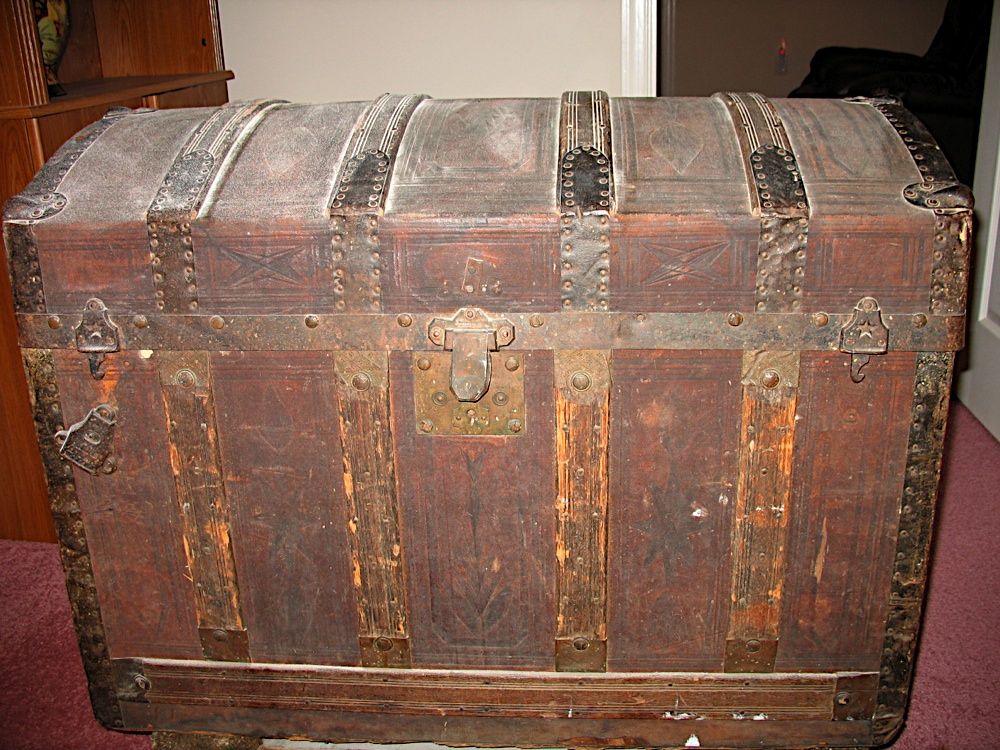
Trunk of Lizzie Houston Row

Trunk of Lizzie Houston Row (interior)

Mourning dress of Lizzie Houston Row

Mourning hat of Lizzie Houston Row

     The trunk of my great grandmother holds a great many treasures, including the mourning outfit she wore to her husband's funeral.

Checkbook of Lizzie Houston Row

From the checkbook of Lizzie Houston Row

From the checkbook of Lizzie Houston Row

    Images from my great grandmother's account with the banking house of Conway, Gordon and Garnett.

Funeral flowers

     Flowers saved from the funeral of Lizzie Houston Row's mother, June 1899 at New Providence Presbyterian Church in Rockbridge County.

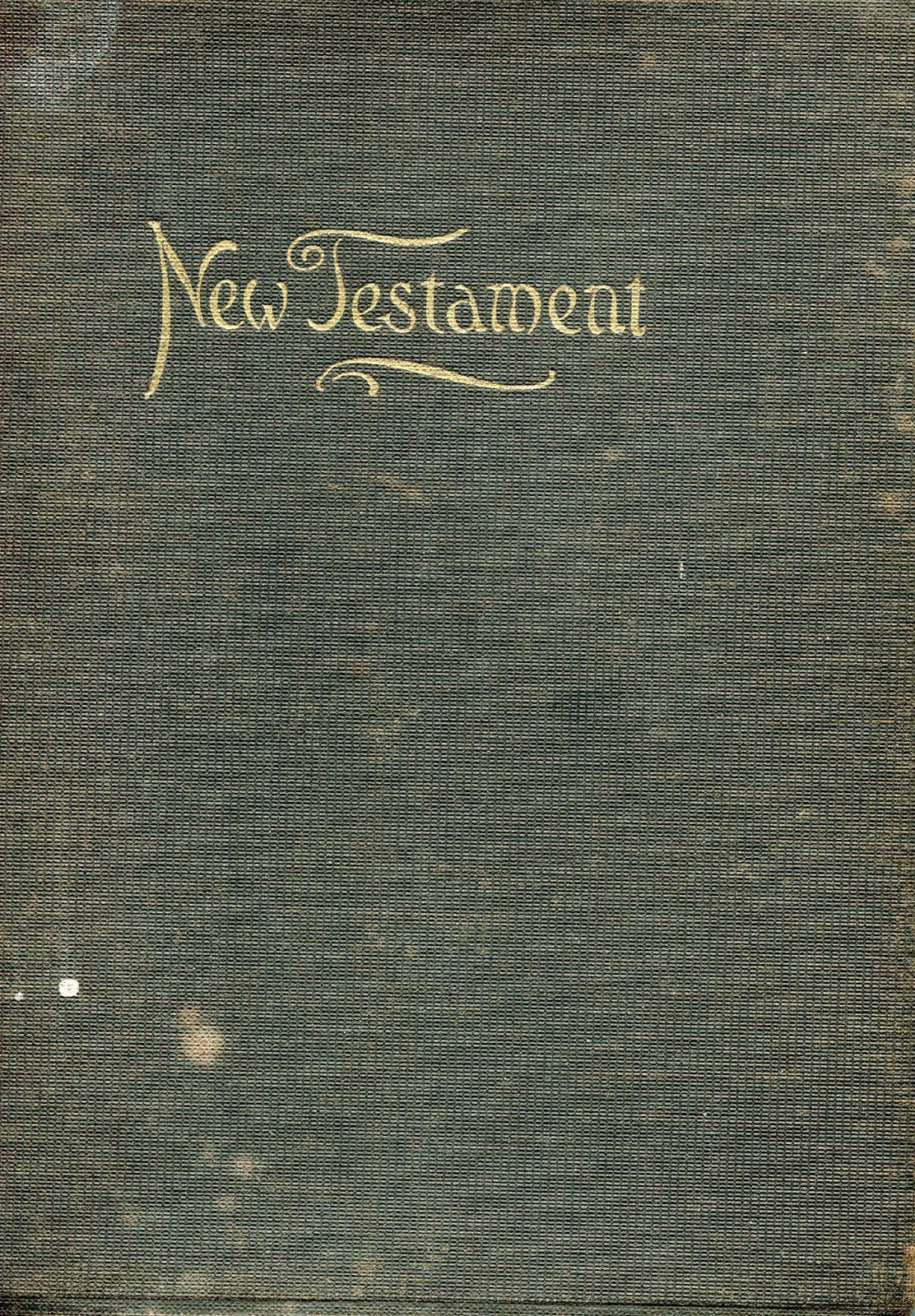
New Testament of Fannie Kent Row

     This New Testament belonged to my grandmother.

Mustache cup

     This mustache cup was given to George W.E. Row shortly before his death in appreciation for teaching the men's Bible study class at Shady Grove Methodist Church.

Kent pie safe

     This pie safe belonged to the family of Warner David Kent, my grandmother's grandfather. The top of it was chopped by a hatchet wielded by a Union soldier in the frenzied search for food or valuables in May 1864. Many thanks to John Cummings for this photograph.

Oath of Allegiance of G.W.E. Row

Parole of George W.E. Row

     These two documents effectively ended my great grandfather's role in the Civil War.

POSOA badge

POSOA badge (reverse)

     This badge of the Patriotic Order of the Sons of Americal belonged to Samuel Tilden Wakeman, husband of my great aunt. Sam Wakeman deeded a small parcel of land at Catherine's Furnace to be used by the local branch of the POSOA.

Side saddle

     This side saddle belonged to my great aunt, Mabel Row Wakeman.

Quilt from Greenfield

     This quilt was made at Greenfield plantation, which had its own weaving house, probably by my great grandfather's cousin Rachel Row Farish.

Rifle of Richard Estes

Rifle of Richard Estes (detail)

     This rifle belonged to my third great grandfather, Richard Estes (1758-1832). It hung over the fireplace at Greenfield for one hundred years. The rifle is over six feet in length and it is said that fourteen inches had been cut off the barrel so that it would fit over the mantle. This type of gun with its exaggerated length was used to trade with the Indians. The brave who could provide a stack of furs equal to the height of the gun would get the rifle.

From the Prayer Book of Thomas and Rachel Keeling Row

     This artifact is one of the crown jewels of this virtual museum. These pages from the Book of Common Prayer which belonged to Thomas and Rachel Row of Orange County documented the births and deaths of their fourteen children, as well as the birth of the slaves who lived on their farm.

Valise of Nanny Row

     This valise of my great great aunt Nanny (also spelled Nannie) was used to keep her important papers during her years at Greenfield.

Williams stone

     This stone was used by the family of James Tompkins Williams of Lynchburg to step into the carriage outside their home. It is now part of the family's burial plot. James T. Williams was a son of Jehu Williams and husband to my great great aunt Martha Row.

Sarah Row memorial


     This needlepoint was made to commemorate Sarah Row, a sister of my great grandfather. Sarah is buried in an unmarked grave at Greenfield.

Ink stamp of George W.E. Row

Ink stamp of George W.E. Row

Stamp of GWE Row

     This is a handmade ink stamp which belonged to my great grandfather.

Swords of George W.E. Row

Cavalry saber of George W.E. Row

     The curved cavalry saber and scabbard were used by my great grandfather during the Civil War. The straight foot officer's sword was likely captured from a Yankee soldier by Private Row.