Search This Blog

Thursday, June 7, 2018

Powhatan Foster

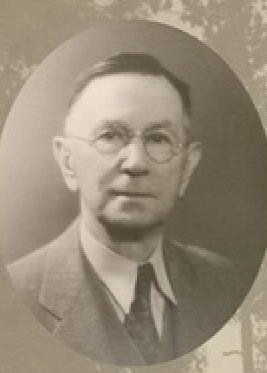
Powhatan Thomas Foster (Barbara Faulconer)

     For a number of years now, I have wanted to write about Powhatan Foster, who was a friend and an employee of my great grandfather, George Washington Estes Row. Powhatan and George also served in Company E of the 9th Virginia Cavalry, although not at the same time. Over the past year, I have had the good fortune to be given access to resources that have made it possible for me to tell Powhatan's story with with the kind of detail that would not have been possible earlier.

Lily Foster Haney (Barbara Faulconer)

     Last year, Barbara Faulconer shared with me a splendid and richly detailed history of the Foster family written by Lily Foster Haney (1892-1973), a daughter of Powhatan Foster. Lily taught in the public schools of Spotsylvania County for many years, and she wrote her history in a lucid and flowing style that is a joy to read. In this essay, I will be quoting from her work with the notation '(LFH)' at the end of each passage that I include. In addition to Lily's writing, I have also benefited from the Haney family history researched and written by Wade Haney, a grandson of Powhatan.

Map detail of Spotsylvania County, 1863 (Fold 3.com)

     Powhatan Thomas Foster was born in Spotsylvania on December 20, 1846. He was the third of ten children born to William Edwin Foster and the elaborately named Ada Engedi Ellentine Wheatley Harding. Powhatan's older brother, Oregon Dallas Foster, was also born in 1846 (on February 3). Powhatan was born either at his parents' house (indicated as "W Foster in the map detail above) or at "Aspen Hill," the farm of his grandfather, Robert Dudley Foster, immediately to the southwest of William Foster's home.

Robert Dudley Foster (Ancestry.com)

     Powhatan received what formal education he got from his mother's father, Mark Harding, who who was living in the household of William Edwin Foster during the 1850's. It is presumed that Powhatan and his siblings enjoyed the usual fun and games available to rural youngsters of that era. Two of Powhatan's uncles, James and Thomas, were about the same age as his brother Oregon (called "Dee" by the family and later known to the public as O. D. Foster) and himself. In a survey of the Foster farm written by her in 1936 for the Works Progress Administration, Mildred Barnum interviewed Lily Foster Haney and Lena Foster, the widow of Powhatan's younger brother William Beauregard Foster. From Mildred's interviews, we learn that some of the fun and games enjoyed by the Foster boys came with serious consequences: "One night these boys were having a party around a fire near the many outbuildings that a Virginia plantation had in those days. In a spirit of mischief they set fire to a pile of shavings near the cooper's shop, and as a result of this all of 'Marse Robert's' [Robert Dudley Foster] outbuildings went up in smoke. The boys went to bed but when the owner discovered the fire they were punished. Powhatan slipped out of bed and ran downstairs. His grandmother said 'Run, Honey, Run.' He replied 'Please open the door and you will see some running.'"
     When the Civil War began, the Foster men enlisted in the Virginia Cavalry. William Edwin Foster and his brothers James and Thomas joined Company E of the 9th Virginia Cavalry. William's brother, Warrenton Dudley Foster, fought with the 39th Cavalry Battalion and was captured by Federal troops along with Benjamin Cason Rawlings in November 1863. At the age of 15, Powhatan's brother Oregon enlisted in the 9th Cavalry on July 15, 1861.
     The compiled service records for Powhatan Foster do not exist in the National Archives. When he applied for a Confederate veteran's pension in January 1912, he affirmed that he joined the 9th Virginia Cavalry in Culpeper County in May 1863. Family tradition says that Powhatan ran away from home to join his kinfolk serving in the 9th Cavalry. The Foster men of the 9th were unaware that he had come until his name was called out during a roll call shortly after his arrival. Powhatan served with the 9th Cavalry until its remnants were surrendered by General Lee at Appomattox in April 1865.
     He was an excellent horseman and became a courier to General J. E. B. Stuart. "Once he was taking a message from Verdiersville to General Lee near Fredericksburg. His orders were to swallow the message if captured. The Yankees were between the two generals. He ran into the enemy near Shady Grove Church but was not captured. Dad had some narrow escapes but was never hurt, the hat band was shot off his hat was the closest call" (LFH).
     Confederate troops briefly occupied Oakley farm on Catharpin Road after the departure of Union forces (for a full account of the Union occupation of Oakley, please read my post The Letter from Maria Dobyns). Four mounted scouts were dispatched from there to the farm of Caroline Todd near the intersection of Catharpin and Brock Roads in order to learn of the disposition and strength of the Union troops there. These scouts were John Cooper, Marcus Chewning, Eli Jones and Powhatan Foster. In the past few days, Chewning and Cooper had already performed deeds that ensured that their names would be known to history. Mount View farm, which once stood on modern Hill-Ewell Drive, had been occupied by a squad of Union soldiers. Marcus Chewning, a relative of the Chewnings who owned Mount View, rode up to the house and at once realized that enemy soldiers were inside. In a bold move, Chewning rode around the house and yelled and otherwise made as much noise as possible, and fooled the Union soldiers into thinking that they were surrounded by a larger force. These men came out and surrendered to Chewning. John Cooper is generally credited with shooting Union Major William Baldwin Darlington as he stood in the yard at Oakley. Cooper had been perched in a cherry tree across the road at Hazel Hill; his rifle was equipped with a telescopic sight. After his leg was amputated, Major Darlington was taken to the house of William Buchanan near Shady Grove Church. Five weeks later, he was liberated by General Phil Sheridan's cavalry as they made their way through Spotsylvania to Trevilian Station in Louisa County.
     While trotting through a patch of woods near the spring on the Todd farm, Powhatan and his fellow scouts suddenly found themselves confronting a large force of Union cavalry. Powhatan shot the first Federal soldier he saw, who then toppled into the spring (Powhatan later said that this was the only enemy soldier he was certain he killed during the war). Powhatan and his comrades then wheeled their horses about, and made a mad dash through the yard of the Todd farm, trying to get back to Oakley. As they came to the yard gate, three of them successfully leaped over. Eli Jones's horse crashed into the gate and fell. As the others sped on, they called back to him "Goodbye, Eli" for they were certain they would never see him again, as the Union troopers were already fast closing in on them. However, Jones jumped back on his horse, which had not been hurt, and in seconds caught up with his companions, and all four made it safely back to Oakley.
     After the war, Powhatan returned to his father's farm and remained there, working as a farmer and laborer in the local saw mills, until his marriage in 1883. However, he did have an adventure on the high seas when he served on a merchant vessel that sailed to South America. "While there he got a monkey to bring home. This monkey was so mischievous he was always in trouble with the sailors. Finally the monkey disappeared and Dad thought the sailors killed him. Dad was gone a long time on this sailing trip and was reported dead. When he returned a friend told him he heard he was dead. Dad said 'I heard it too, but I knew it was a damned lie when I heard it'" (LFH).

Powhatan Foster (Babara Faulconer)

     During the late 1870's and early 1880's, Powhatan worked at the saw mill of George Washington Estes Row, which was located on the farm of Joseph Talley near Todd's Tavern. His name appeared several times in the business ledgers of Mr. Row:


     He also worked at the saw mill of his brother Oregon, who was in business in Fredericksburg. In addition to being a lumberman, Oregon was also a grocer, served on the city council and was the town's post master. His years of success allowed him and his family to live comfortably in the historic "Sentry Box" house. Meanwhile, despite his best efforts, Powhatan could never quite equal his brother's achievements.

Oregon Dallas Foster (Ancestry.com)

     By the early 1880's, Powhatan was courting Ernestine Virginia Knighton, a daughter of Robert S. Knighton and Georgianna Herring. He loved to attend the local dances, and it was at one of these get togethers that he made his move: "When he proposed to Mother, he was at a dance, he wrote a note, fastened it to the end of a switch and passed it over to her, asking her if she would marry him to look up and smile. Mother's name was Ernestine Virginia, but he always called her Susie" (LFH). Powhatan and Ernestine married at her parents' house on October 18, 1883.
     During the early years of their marriage, Powhatan and Ernestine "lived in a small house at Buchanan's Corner [at the intersection of West Catharpin and Robert E. Lee Drive]. They ran a little store for Mr. Buchanan" (LFH). The first three of their eight children were born during this time, and are shown in the photograph below:

Powhatan Foster and family (Barbara Faulconer)

     About 1890, Powhatan built a house on West Catharpin Road on land that had belonged to his father, who died in 1885. Shown here is a photograph of the place, and a drawing done by Lily Foster Haney. This house was called "New Danielsville:"

New Danielsville (Barbara Faulconer)


(Lily Foster Haney)


     Powhatan worked as a subsistence farmer, earned $1 a day working as a sawyer in the local mills and even worked for a time at nearby White Hall gold mine. Lily noted that while working for the saw mills, Powhatan spent the entire week living in one of the on-site shanties (these shanties also  existed at the Row saw mill). He came home on Saturdays and returned to the mill on Sunday evenings. Working in a 19th century saw mill was a dangerous undertaking. In 1893, Powhatan suffered an injury serious enough to be reported in The Free Lance:

The Free Lance 7 February 1893

     Although he would be remembered as a "small man in stature, with a big heart," he also had a volcanic temper which would subside as quickly as it erupted. His daughter Lily remembered this episode in particular: "One Saturday night he was at Sheppard's store when a young fellow made a rude remark about some lady--the fellow was drinking--up shot Dad's fist and knocked him down--his nose bled and he had a black eye. Dad's fist was hurt too.  Dad knew Eddie was in no condition to go home so he brought him to our house, washed his face and put him to bed. Next morning he lent him a clean shirt and we all went to Craig's [Baptist Church] to an all day meeting. Of course people noticed Dad's hand and asked what was wrong. Dad told them to find the fellow with the black eye and they would know" (LFH).
     Unlike his brother Oregon, Powhatan was a staunch Democrat (Oregon was active in Republican Party affairs and represented Fredericksburg at the 1888 Republican National Convention). Powhatan dipped his toe into local politics, and ran unsuccessfully for a county supervisor seat in 1895 and 1899, and he also fell short in his bid to become a justice of the peace in 1907.

The Free Lance 16 April 1895

     Of course, there were also happy times for the Foster family, which is evident in this article from The Free Lance:

The Free Lance 3 November 1910

     However, the year 1914 would be marked by a succession of tragedies in the Foster family. Oregon Dallas Foster died on June 26. On November 13, fourteen-year-old Robert Edwin "Ned" Foster, the older of Powhatan and Virginia's two sons, died of rheumatism.
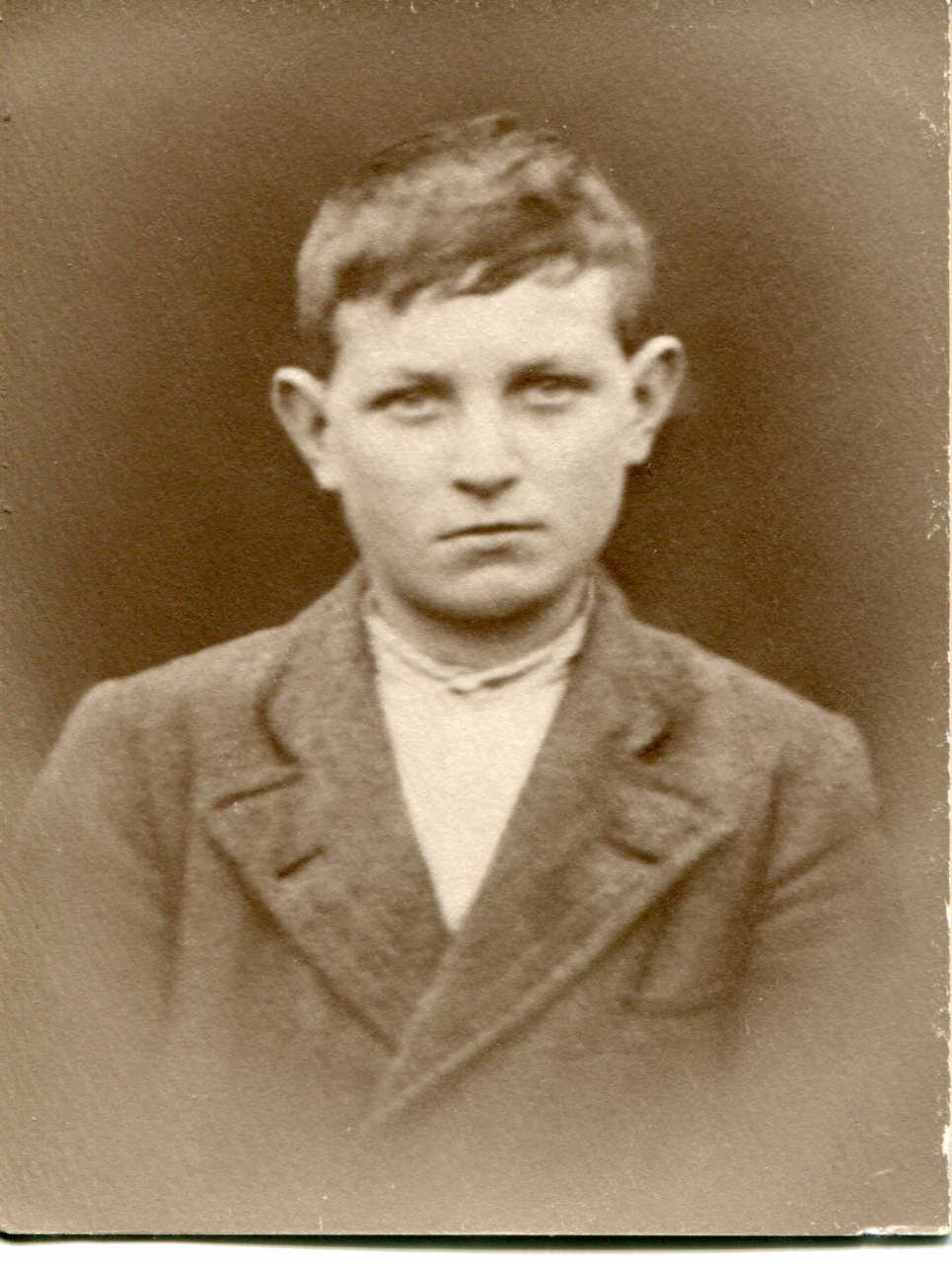
Ned Foster (Barbara Faulconer)

     Just three months prior to Ned's death, on August 10, 1914, the life of Powhatan Thomas Foster came to an abrupt and violent end at the saw mill of C. W. Howard. The particulars were provided in two obituaries published in The Free Lance:

The Free Lance 13 August 1914

    
The Free Lance 18 August 1914


Death certificate of Powhatan Foster (Ancestry.com)

     Powhatan was buried in the Foster family cemetery, in which the graves were marked by simple field stones. About 20 years later, Lily Foster Haney made arrangements to have the body of her father to be removed to the Confederate Cemetery at Spotsylvania Court House so that he could lie at rest in the company of his fellow soldiers. In late 1935, Mrs. Charles R. "Bertie" Andrews ordered a headstone for Powhatan from the War Department. Bertie's father, Thomas Addison Harris, had served in Company E of the 9th Virginia Cavalry.

(Ancestry.com)


(Ancestry.com)


Sources:

Barnum, Mildred. "The Foster Place and Foster Graveyard." The Works Progress Administration of Virginia, November 18, 1936.

Haney, Lily Foster. "Family, Friends & Neighbors: Lily Foster Haney's Autobiography",1970.

Haney, Wade R. "History and Genealogy of the Albert and Sophie Haney Family." Researched and compiled by R. Wade Haney, 1998.


Thursday, May 3, 2018

Zion, Part 4

[This is the final installment of a history of Zion Methodist Church. Here are the links to the previous articles in this series: Zion, Part 1, Zion, Part 2 and Zion, Part 3.]

Zion's collection plates

     In 1960, concrete walks were laid in front of the church. A new pulpit Bible was given by the MYF; a baptismal bowl was donated by Mr. and Mrs. H. O. Lovell and their son, Michael; collection plates were purchased by Mr. and Mrs. J. R. Pendleton and their son, Bobby; and linen cloths were purchased for the communion table by the WSCS. In addition, a new piano and organ were bought for the sanctuary.
     After Reverend Haynes left the charge in 1962, he was replaced by Reverend Robert J. Donnelly, who remained until 1965. When Reverend William "Bill" Carter began his ministry in 1966, he brought a new energy to the church. He is well remembered for his musical gifts and fine singing voice. Many of Zion's children received musical instruction from Reverend Carter and the church's organist, Anne Vojnovich. After he left Zion, Bill Carter taught at Spotsylvania High School and began a long career in education.


     In 1972, during the ministry of Reverend Lewis Minter, ground was at last broken for the new educational building. The first shovel of earth was turned over by Zion's oldest member at the time, Annie Jett. The construction of the building was made possible by the generosity of member Susie Swift and the dedication of Lynwood "Slim" Landrum, as well as the hard work of many volunteers. The new facility was named the Swift-Landrum building. At long last, Zion now had a kitchen, classrooms and bathrooms.
    
(Leota Pendleton)

(Leota Pendleton)

     Reverend Barry Minnick served 1973-1977. New hymnals were bought for the church. Reverend Minnick wrote a brief history of the church, a copy of which is in the library of the Spotsylvania County Museum.

Reverend Barry Minnick and family (Leota Pendleton)

New hymnals for Zion, 1974 (Leota Pendleton)


     Significant changes occurred during the years when the popular Reverend Wesley Astin was pastor. Reverend Astin, who served 1979-1982, became Zion's first full-time pastor when the church went station in 1982. That same year, a new parsonage was built; Reverend Astin and his family were the first to live in it.


     Reverend Beth Marie Barnett (1982-1986) was Zion's first female pastor. In 1984, the church celebrated the 125th year of its building with an all day service. Some attendees came dressed in period clothing.
     Zion's land holdings grew for the first time in many years during the ministry of Reverend John R. Esaias, Jr., (1988-1996) a retired Navy chaplain who had served during World War II. The Virginia Conference gave Zion $3,200 to help buy 1.12 acres of the Fairchild property adjoining the rear of the church's lot. In addition, the tireless Flaura Jett raised the remarkable sum of $4,100 for the church building fund by crocheting and selling Easter baskets. Reverend Esaias and his wife journeyed to England to witness the enthronement of Reverend George Carey as the Archbishop of Canterbury.

(Leota Pendleton)

     Member John Young helped to coordinate the events that were organized for the weekend of May 28-29, 1994 to commemorate Zion's history during the events that took place in May 1864.

(Leota Pendleton)

(Leota Pendleton)

(Leota Pendleton)

     Copper gutters and downspouts were installed in 1984:

(Leota Pendleton)

     On September 24, 1995 ground was broken to build a new fellowship hall, which became a part of the Swift-Landrum building. The dedication of the new addition took place on Homecoming Day, October 13, 1996. On that same day, member Bob Weeks donated a piano to the church in honor of his mother, Maureen.
     The following year, Bob Weeks and member Justin Williams announced their intention to be candidates for the ordained ministry. In June 1998. Bob Weeks received his first appointment as a full time pastor to a charge in the Farmville District. In June 2000, Justin Williams was also appointed as a pastor to the Farmville District.
     In February 1998, the Administrative Council voted to become part of the Civil War Trail Tour:

(Leota Pendleton)

     When Reverend Barbara Jacobs began her thirteen-year ministry in 2002, she would become Zion's longest serving pastor.

(Leota Pendleton)

Barbara and Alan Jacobs (Leota Pendleton)

(Leota Pendleton)

     Here are a few of the many highlights of Reverend Jacobs's years at Zion:

- In 2004, Reverend Jacobs and three of Zion's members--George Applin, Bodie Williams and Diane Williams--formed a team to travel to Honduras on a medical mission in conjunction with other members of the Barnabas Committee to treat sick children. Their mission to Honduras took place June 18-28, 2004.

- In 2007, a new choir was formed. In April of that year, Reverend Jacobs led a group to Kentucky to work with the Native American Red Bird Mission. In July, Zion held a grand opening of the food pantry to serve the community.

- In 2009, the church spent $4,600 to repair the weather-damaged windows and doors of the sanctuary.

- in 2012, special-needs access to the sanctuary was installed at a cost of $6,000 and was consecrated on September 16.

- On January 14, 2013 Reverend Jacobs offered the invocation at the noon session of the General Assembly.

     When Reverend Jacobs left Zion in 2015, she shared these parting remarks with the congregation:

"A Final Note From the Pastor

     Words are somehow inadequate to capture the reflections of thirteen years of ministry we have shared. I count it a blessing in my life that I was appointed to be your pastor in 2002. It has been my privilege to journey with you during life's greatest joys and deepest sorrow--yours and mine. Now, I prepare for continued service in another calling--grandparenthood!
     Still, I leave your pastoral service in June knowing that there have been some milestones during our shared ministry: expanding the parking lot, refurbishing the cemetery, welcoming Bishop Charlene Kammerer to be our Homecoming preacher, renovating the kitchen, relocating and renovating the playground, building the sound booth, initiating and videotaping of worship services, restoring the sanctuary, chartering Cub Scout Pack 375, implementing the Food Pantry and creating the Community Garden. However, I am more pleased to have shared in visiting folks at home, hospitals and nursing homes, confirming several of our youth, celebrating Holy Communion, baptizing babies and adults, receiving new members into our fellowship, conducting weddings, and sharing in services of death and resurrection for the saints who have gone on to the church eternal. I am glad to have had the opportunity to teach all ages, preach hundreds of sermons, bless beloved pets, hold numerous babies, clasp many frail hands, and act silly for silly sake. I am thankful to have shared in missions--FredCamp, ZionCamp, Red Bird, and a medical mission to Honduras. I have enjoyed each Christmas Parade, Courthouse Luminaria, VBS/Children's Summer Camp, Son's Fun Club, Stars and Stripes Spectacular, and every opportunity to wear my hoop skirt as we participated in county-wide and National Park Service War re-enacted activities involving Zion. 
     Now, I leave you a charge--to build upon the vitality and efforts that we began one year ago. Strive to reach out and meet new people with the ultimate goal of sharing the love of Christ with others. Expand the opportunities to bring Zion into the community such as we did with Bible Study at Butternut and Blue, Easter Sunrise Service and the Living Nativity at the Pavilion. Let our neighbors here in the Courthouse area know who you are--children of God called to be disciples of Jesus Christ whose purpose it is to share the good news. You will see results!
     Being part of this church has meant being part of a family--gathering together at table (eating food prepared by the best cooks in Spotsylvania!), evaluating our efforts, sharing Zion's good name in our community, and planning for the future. Although my pastoral responsibilities will end in June, abiding love and affection for the Zion Church family will continue. Thank you so much for having made Alan, Robin, Elianna, Bill and me a part of your family. May God continue to guide you and bring manifold blessings upon your missions, ministries and witness."

     Zion welcomed its current pastor in July 2015:

     "Pastor Kimberly Barker-Brugman joined us this summer as our Pastor. Her first service was on July 7th. Pastor Kim is an ordained elder in the United Methodist Church (UMC) and is part of the Virginia Annual Conference of the UMC. She is a graduate of the Methodist Theological School in Ohio with a Master in Divinity and a Master in Christian Education (1993). She has served rural and suburban churches in upstate New York and the Virginia Conference. Her husband, Kevin, moved the family to Harrogate, England to serve our country in July 2013. 
     Pastor Kim is a Veriditas Facilitator, a certified spiritual director, and a Stephen Ministry Leader. She took her spiritual direction training through RUAH at Richmond Hill Retreat Center in Richmond, Virginia. 
     Her undergraduate degree is from Ohio Wesleyan University where she took a BA in botany and a minor in zoology. When asked about this change in vocation it seems like a natural step to her as she moved the Creation to the Creator. Both have always been part of her life. She loves nature and often finds God in a quiet time walking through the woods or fields or simply gazing at a garden of flowers or a bird in flight. 
     She loves creating and leading retreats and workshops, serving pulpit ministry and spiritual formation groups. She also does drama sketches of Esther, Mrs. Isaiah, The Bent Over Woman, Women at the well and Susanna. In her spare time she enjoys: knitting, crocheting, reading, photography, hiking, biking, traveling, scrapbooking, and hanging out with the family. 
     'I love that Jesus was a healer. I believe God can heal the world, human beings, humanity, the Church, and people in many ways. I believe in Jesus's message of hope and peace for individuals, churches and the world.'
     We welcome Pastor Kim, her husband, Kevin, sons Jason and Jonathan, and Buddy, the clergy canine."
     One of the challenges facing Pastor Kim and the church was finding a permanent fix for the building's 157-year-old windows. Despite the money spent for their repair several years previously, by 2016 the required additional attention. A window repair company based in the Shenandoah valley removed the sashes and took them to their facility (in the meantime, plywood was installed over the window openings). The glass was removed from the sashes during their restoration and then replaced in the muntins. After the refurbished windows were reinstalled, a sheet of plexiglass was installed over each one to protect it from the elements. The repair of the windows in the sanctuary cost $1600 each and the two in the balcony cost $400 each. Money was raised, and each window was dedicated either to the family that funded a given window, or to someone who had contributed to the overall project, or to two special people recognized by the church--Leota Pendleton and Joyce Fairbanks.
     
     In the spring of 2018, a decaying oak tree in front of the fellowship hall was removed. While the tree was being taken down, the chainsaw of one of the workmen struck a minie ball that had remained embedded in it since May 1864.


Written by Patrick Sullivan in 2018
Additional research and editing by Dennis Gallahan

Sources:

"The Journal of Rev. Francis Asbury of the Methodist Episcopal Church, in Three Volumes. Vol. III, From November 8, 1800 to December 7, 1815." New York: Published by N. Bangs and T. Mason for the Methodist Episcopal Church, 1821.

"The Baltimore Century Plant: History of Eutaw Methodist Church and the Relation of Eutaw Church to the Downtown Problem," 1908.

The Letter of Samuel Raymond Beardsley, written at Zion Methodist Church August 7, 1862.

Butts, D. Gregory Claiborne, "From Saddle to City by Buggy, Boat and Railway," 1922.

Cummings, John C. "Your Husband's Noble Self-Sacrifice." North & South Magazine, Volume 7, Number 4, June 2004. 

Dubose, Horace M., D. D., "Francis Asbury: A Biographical Study," Nashville, Tenn: Publishing House of the M. E. Church, South. Smith & Lamar, Agents, 1916. 

Dunkerly, Robert M., Pfanz, Donald C.; and Ruth, David R.; "No Turning Back: A Guide to the Overland Campaign, from Wilderness to Cold Harbor, May 4-June 13, 1864." El Dorado, CA: Savas Beatie, 2014.

Lafferty, John J., "Sketches of the Virginia Conference, Methodist Episcopal Church, South." Richmond, VA: Christian Advocate Office, 1880.

Lafferty, John J., "Sketches and Portraits of the Virginia Conference: Twentieth Century Edition." Richmond, VA: 1901.

"Minutes of the Seventy-Ninth Session of the Virginia Annual Conference of the Methodist Episcopal Church, South, Held at Norfolk, Virginia Nov. 26-Dec. 4 1873." Edited and Published for the Conference by P. A. Patterson, Norfolk, VA. Printed at the Landmark Book and Job Office, 1874.

"Minutes of the Eighty-Second Session of the Virginia Annual Conference of the Methodist Episcopal Church, South, Held at Norfolk, Virginia November 15-23, 1876. Edited and Published for the Conference by P. A. Patterson. Richmond, VA: J. W. Fergusson & Son, Printers, 1876. 

The writings and scrapbook of Zion member Leota Pendleton.

Robertson, Jr., James I., "General A. P. Hill: The Story of a Confederate Warrior." New York, NY: Vintage Books, 1997. 

"Tabernacle United Methodist Church History: September 1842-1984."

Tabernacle United Methodist Church, "Timeline of Preachers."

Weeks, Bob, "On the Road to Traveler's Rest: The Story of Zion United Methodist Church of Spotsylvania Courthouse, Virginia During the 19th Century," 1994.


Sunday, April 29, 2018

Zion, Part 3

[This is the third in a series of articles on the history of Zion Methodist Church. Click here to read Part 1, and here to read Part 2]

     Leota Pendleton's scrapbook contains another photograph of one of the ministers who served Zion during the last century. William Luther King was born in Patrick County, Virginia in 1870. He was the husband of New Jersey native, Mary Ann Waddington. Reverend King was pastor at Zion 1929-1932. Like the Pulliams, the Kings maintained ties with Spotsylvania after they had moved on. Both of them are buried in the Confederate Cemetery.


     On October 8, 1939, clerk of court and lifelong member Arthur Hancock Crismond donated to Zion a Bible that he inscribed:


     Just thirteen months later, on November 20, 1940, Arthur Crismond died of a heart attack. His death certificate was made out by his brother-in-law, Dr. William A. Harris, who was county coroner at the time. Crismond's funeral was officiated by Reverend Charles Lewis Stillwell, Zion's pastor 1940-1943. His obituary appeared in the November 23, 1940 edition of The Free Lance Star.

Arthur Hancock Crismond


     For the first 81 years of its existence, Zion was illuminated by four oil-lamp fixtures suspended by hooks from the ceiling. In 1940, the church was wired for electricity. The oil lamps were replaced by four incandescent fixtures suspended from the ceiling near the hooks, which were left in place. These new fixtures included the same frosted glass bowls that are still in use in the vestibule.


     At some time during the ministry of Reverend Wesley Astin (1978-1982), these fixtures were replaced with the four chandeliers now in use. In August 2010, Reverend Barbara Jacobs had replaced the chandelier in her dining room, and she donated her old one to the church, which now hangs over the pulpit. Just two weeks later, Zion acquired the large chandelier that now hangs in the middle of the sanctuary. Zion member Richard Reichert, an electrician, received a call for service from the Community Funeral Home in Alexandria, whose owner thought that his chandelier had stopped working. When Richard and his grandson arrived at the funeral home, they discovered that the fixture was still working, but the light bulbs had been partially unscrewed. Since the owner of the funeral home had already bought a new fixture, they replaced the old one. The owner was asked if he would consider donating the old chandelier to Zion, and he agreed to do so.
     Just as the Civil War had left its mark on Zion, the Second World War also had a profound impact on the church. A number of the male members of the congregation enlisted in the military service. Typical among them was Cary Crismond, who served as a second lieutenant in the Army Air Corps. Prior to his enlistment, Cary had been the assistant clerk of court, serving in that role from 1932 until his father's death in 1940; then Cary was appointed to fill out his father's unexpired term. He resumed his duties upon his return home.


     Attendance during the war and in the years that followed declined sharply. At times, as few as 10-15 people showed up for Sunday service. In some years, the church was unable to meet the meager budget requested by the Richmond District. There was some anxiety as to whether Zion could remain open. During these lean years, Cary Crismond brought firewood on cold Sunday mornings and lit the stoves.
     During the 1940's another permanent mark was made on the church, this time by member Flaura Jett. One morning she showed up alone at the church, equipped with a crowbar and hammer, and removed the wooden partition that ran down the middle of the center pews. This partition, and the twin entries to the church, was a reminder of an era when male and female members of the congregation sat separately. What, exactly, motivated Flaura to take this dramatic step is not known. But she was known as a person of strong resolve. Years later, Flaura (who was a founding member of the Spotsylvania Volunteer Fire Department Ladies Auxiliary) would routinely deliver lunch to the firefighters stationed near the courthouse. On one day when her car would not start, she would not be deterred from making her expected delivery. She loaded up the lunches in the cab of her son's semi and fed the firefighters.

Homecoming, 1956 (Leota Pendleton)

     The latter half of the 1950's witnessed an improvement in Zion's fortunes. In the autumn of 1956, Zion hosted its first homecoming service in at least fifteen years. Reverend George Burroughs preached the sermon that day, and held a revival during the following week.


     After the departure of Reverend Burroughs, Reverend Donald Durost served at Zion until June 1957. At that time, Reverend Cephas Haynes became pastor of the newly-formed Eastland-Zion charge. On the first Sunday he held services at Zion, only 13 people were present. However, Reverend Haynes brought a new energy to the church, and during his five year tenure there, much improvement took place. Attendance at the morning service grew to 40 people, and the Sunday school membership increased to 26. Reverend Haynes made it a priority to increase Zion's membership.


From Leota Pendleton's history of Zion:

     "A Vacation Bible School was held the summer of 1957 and was a great success. In August 1957 the interior of the sanctuary was redecorated in readiness for the second Homecoming Day to be held in a number of years. Guest speaker was a former pastor, Reverend Donald Durost. A week of revival followed that was conducted by Reverend Haynes. At this time the Eastland-Zion charge bought a parsonage located adjacent to Eastland Church. Zion's portion of this indebtedness was $3,000 with responsibility for one half of the upkeep.
     "Formerly, the ladies of Zion participated in a mission program called the Women's Missionary Society. This name, too, was changed. The new Women's Society of Christian Service (WSCS) was organized on October 18, 1957, with ten ladies present. Much enthusiasm was shown as plans were made to do mission work and create projects by which the church and building funds would benefit.
     "Shortly thereafter, the WSCS started serving dinners, having hymn sings, bake sales, etc. with the proceeds going to church expenses. The fear that the doors of Zion would close was pushed back gradually, as the will of God was pushed forward.
     "The people of Zion saw a growth in attendance along with a rise in finances each quarter 1957-58. The first quarterly conference for Eastland-Zion was held on November 24, 1957 at 2:30 pm with Reverend Doctor Carl Sanders, Richmond District Superintendent presiding. There was a good representation from both churches and brought much encouragement by Dr. Sanders."


     In 1957, the floor of the balcony was painted to cover up what were presumed to be blood stains still remaining from May 1864, when the church was used as a hospital by the Confederate army. The decision was made to use the balcony as a Sunday school class, and the painting was done as part of the effort to prepare the balcony for that purpose. At least one stain is still visible on the knee wall at the front of the balcony. In 2018, church historian Dennis Gallahan conducted a luminol test on that stain in order to determine the presence of blood. The results of the test showed that it was indeed blood.

Spotsylvania Post Office and car of Alice Graves Coleman (Charles Trigger)

     By 1959, attendance at the Sunday school class had grown to the point that the balcony could no longer accommodate it. A solution was proposed by Spotsylvania postmistress Alice Graves Coleman (patrons of the post office would know that it was open for business when the saw Alice's car parked in front). Although she was not a member of the church, Alice regularly attended services at Zion. Since she was about to retire from the post office after 20 years of service, she offered the small building, which she owned, to be used as additional space for the Sunday school. The building was moved from its location across Courthouse Road from modern Pendleton's Hardware to the church. There it was placed on a sound foundation and was connected to the church by a small passageway, which also served as another entry to the church. Today the old post office serves as the office of the pastor.


From Leota Pendleton's history of Zion:

     "In August of 1959 Zion celebrated the 100th Anniversary of the completion of its church by having a Homecoming Day with Dr. Carl Sanders, Richmond District Superintendent as guest speaker. In accordance with the Centennial, new hymnals were presented to the church in memory of the Reverend William Luther King and his wife, Mary Ann Waddington King by their children Esther V. King, Reverend Luther W. King and Norman G. King. These beautiful hymnals added much to the worship services and were most gratefully accepted."

Reverend Cephas Haynes and the discovered sword (Leota Pendleton)

     In 1960, the church decided to replace the original floor in the sanctuary. The National Bank of Fredericksburg provided a loan of $2,000, and work commenced. While the old wide-plank floor was being removed, workmen discovered a cavalry sword in the space beneath the church. Despite the fact that the sword had lay there for many years, it was in surprisingly good condition. The sword was presented to Reverend Cephas Haynes, the popular pastor at that time. Years later, after the death of Reverend Haynes, his widow returned the sword to Zion as a gift. The church had the sword handsomely mounted for display, and it remains in the possession as of this writing. 

The display for the sword found in 1960 was made by Zion member Bob Scott

     The enigma of why the sword had been placed under the church has been a puzzle since its discovery in 1960. Until the floor was replaced that year, the only access to the space under the church had been, and remains to be, six small voids left in the brick foundation, presumably for the purposes of ventilation.


     A theory has been proposed by church historian Dennis Gallahan, and it begins with a headstone in the church cemetery marking the grave of Charles R. Chewning, who fought with Company E of the 9th Virginia Cavalry during the Civil War. 


     Chewning kept a journal of his experience during the war. This diary is part of the collection of the Spotsylvania County Museum, and a transcription of its entries can be found on the museum's website. Chewning's entry for August 28, 1862 forms the basis of Mr. Gallahan's theory regarding the presence of the sword under the church.


     Mr. Gallahan believes it may be possible that the sword captured by Chewning on the day he was wounded is the same sword found beneath the church. Perhaps a comrade of Mr. Chewning put it under the church on the day of his funeral in 1912 as a fitting remembrance of his sacrifice during the war.